Wednesday, October 7, 2015

WELLNESS WEDNESDAYS: Health Literacy Month

"It is health that is real wealth and not pieces of gold and silver."                                --Mahatma Gandhi


October is Health Literacy Month.  Since Growing Healthy Kids started in 2009, we have been committed to improving the health literacy of Americans so we can reverse, prevent, and halt childhood obesity and obesity-related diseases. 

Health literacy is the degree to which individuals have the capacity to obtain, process, and understand basic health information and services needed to make appropriate health decisions.  Do you and your family have access to the health information you need in order to make the appropriate health decisions?  If not, Wellness Wednesdays can help bring you much-needed health information.  We are here for you and your family.  We help you improve your health literacy so you can be health-smart and heart-healthy.  Think of what your life would be like if you couldn’t read.   Imagine if you were blind and couldn’t read Braille.  What if you were thirsty but couldn’t swallow? Being literate about your health so you can make good decisions makes sense.   

Commit to improve your health by deciding to do WHATEVER IT TAKES to obtain, process, and understand the basic health information you need to make decisions about your health.   Your children’s health - and their lives – may depend on it. 

Be a role model for health literacy and good health. Ask questions.  Seek answers.  Eat whole plant-based food.  Read food labels and avoid eating foods containing added sugars, food dyes and ingredients you can't pronounce.   Drink mostly water.  Walk and play daily with your children.  Get a good night's sleep every night. 

Click here for information from the National Diabetes Education Program about how to help your children stay healthy by preventing type 2 diabetes.  

In gratitude,
Nancy Heinrich

Founder, Growing Healthy Kids, Inc. 

Wednesday, September 30, 2015

WELLNESS WEDNESDAYS: National Childhood Obesity Awareness Month

“Strive not to be a success, but rather to be of value.” 
                                               --Albert Einstein


Kids on the beach Going outside to play with your kids?  Good for you!  These are how healthy habits begin.  Our children need and deserve to have quality time with their parents and there is nothing better than taking a family walk together in the woods or on the beach. 

September is National Childhood Obesity Awareness Month.  Here are 5 tips for helping kids grow up healthy:

Tip 1:  Make fitness and physical fun a priority on your family calendar.  Schedule time together to go outside and play with your kids.

Tip 2:  Drink water not soda.  With around 10 teaspoons of sugar in a regular 12 ounce soda, there is more sugar in one soda than kids should have in an entire day.  Drinking sodas before bedtime can lead to poor sleep.  

Tip 3:  Plan your main meals around the vegetables that are fresh and locally grown, whenever possible. Fall is coming up and it is a great time to focus on delicious veggies that are high in dietary fiber such as butternut and spaghetti squashes. 

Tip 4: Make sure breakfast includes some protein, a little good fat like avocado or nuts, and good carbs like steel cut oats or whole grain toast. Let your kids help plan, shop for, and prepare meals, including breakfast.   

Tip 5:  Establish bedtime routines so that your kids have plenty of sleep at night in a bedroom that is free of electronics.  Do not let kids have cell phones in their bedrooms because if cell phones are within 5 feet of their brains, they can interfere with their sleep. 

Check out Let's Move, the First Lady's initiative to combat childhood obesity by clicking here.  To read the President's proclamation on National Childhood Obesity Awareness Month, then click here.

In gratitude,
Nancy Heinrich

Founder, Growing Healthy Kids, Inc. 

Wednesday, September 23, 2015

WELLNESS WEDNESDAYS: Watering the Almond Trees: The Hidden Cost of Food

“California is basically all over your market basket,” says Penn State Professor James Dunn who studies how weather affects food prices.

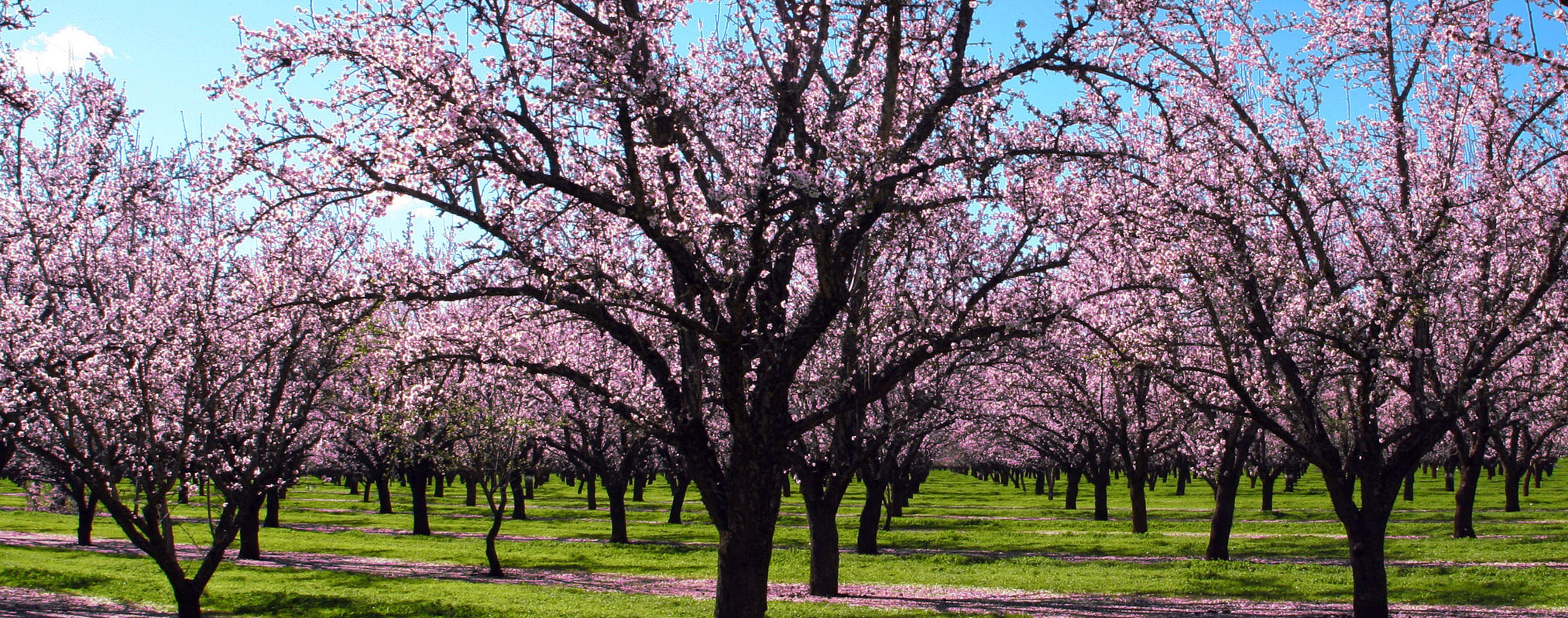
Almond trees in California

Image result for picture of almond trees
Almonds ready for harvest


I love almonds.  Almonds, like other nuts, are a perfect source for the good fats (unsaturated fats) that most of our fats should be and our bodies need for good health.  A handful of almonds is frequently my afternoon snack because it is so darn easy to pack and carry with me.  Almond milk is always in our fridge at home.  Almond butter on gluten-free crackers is one of my favorite evening snacks. 

Almonds, and most other nuts, are grown in California.  In fact, California produces nearly half of the nuts, fruits, and vegetables grown in the United States.  Unless you have been living on Mars, you know that California is experiencing a drought of epic proportions.  Its agricultural products “consume 80% of the water tapped for humans in California.”

So a recent Sierra magazine article (September/October 2015 issue) caught my attention.  The article was about how much water goes into producing foods Americans love.   Did you know…it takes 97.2 gallons of water to produce one ounce of almonds (shelled)?  One ounce? 

Here’s how many gallons of water are needed to produce one ounce of foods:
  1. Beef:  106.28*
  2. Almonds:  97.2
  3. Chickpeas:  76.07
  4. Lentils:  71.28
  5. Pork:  41.25
  6. Rice:  16.26
  7. Asparagus:  20.32
  8. Artichokes: 5.92
  9. Peaches:  4.69
  10. Raspberries:  4.22
  11. Orange juice:  4.11
  12. Wine: 3.48
  13. Kale:  2.26
  14. Eggplant: 1.69
  15. Strawberries:  1.24
  16. Tomatoes:  0.95

As stewards of our natural resources, we must use water responsibly.  We owe it to our children to also teach them to conserve our water supplies.  By not wasting water we can help ensure that we have enough water for growing the foods that promote good health.  Can you imagine a world without fruits and vegetables?  A world without almonds?  When America’s farmers have to restrict their water use, our food supply may be on the line.  So next time you leave the water running while you brush your teeth or you run a load of dishes in half-full dishwasher, rethink your actions. 

Conserving our water use is a good thing.  A very good thing.  Your next bag of almonds may depend on it! 

In gratitude,
Nancy Heinrich
Founder, Growing Healthy Kids, Inc.

*Look for more on the topic of eating lower on the food chain in a future issue of Wellness Wednesdays.  Consider this: to produce a 6 ounce steak, more than 600 gallons of water are needed.